
Jarret, Ho Kai Siang
Agent Bart, reporting for duty
Agent Bart, reporting for duty
AI This, AI That.
Given Singapore's push for the use of artificial intelligence, it was only a matter of time before I stumbled into it. I got started through a free 6-month Pro plan by Perplexity, used it for brainstorming ideas, editing copy, and research; I was always on Perplexity’s default model. My usage was minimal. My initial understanding of AI was just assistants that users can prompt to help solve problems or generate images or videos. That was it.
Agentic Harness
I came across this video by Tommy Geoco through the UXTools newsletter. The video is a practical guide by Tommy on building and using a personal AI agent to automate workflows within a creative and media studio. He explains how he transitioned from using standalone AI tools to an agentic "harness" that functions like an operating system for his work. He uses OpenClaw as the agent’s container, with Obsidian as his “knowledge vault” to store project context, journal entries and data, where the agent can query to maintain continuity. He also spent $13,100 on token calls which he eventually earned back.
My Personal Agent
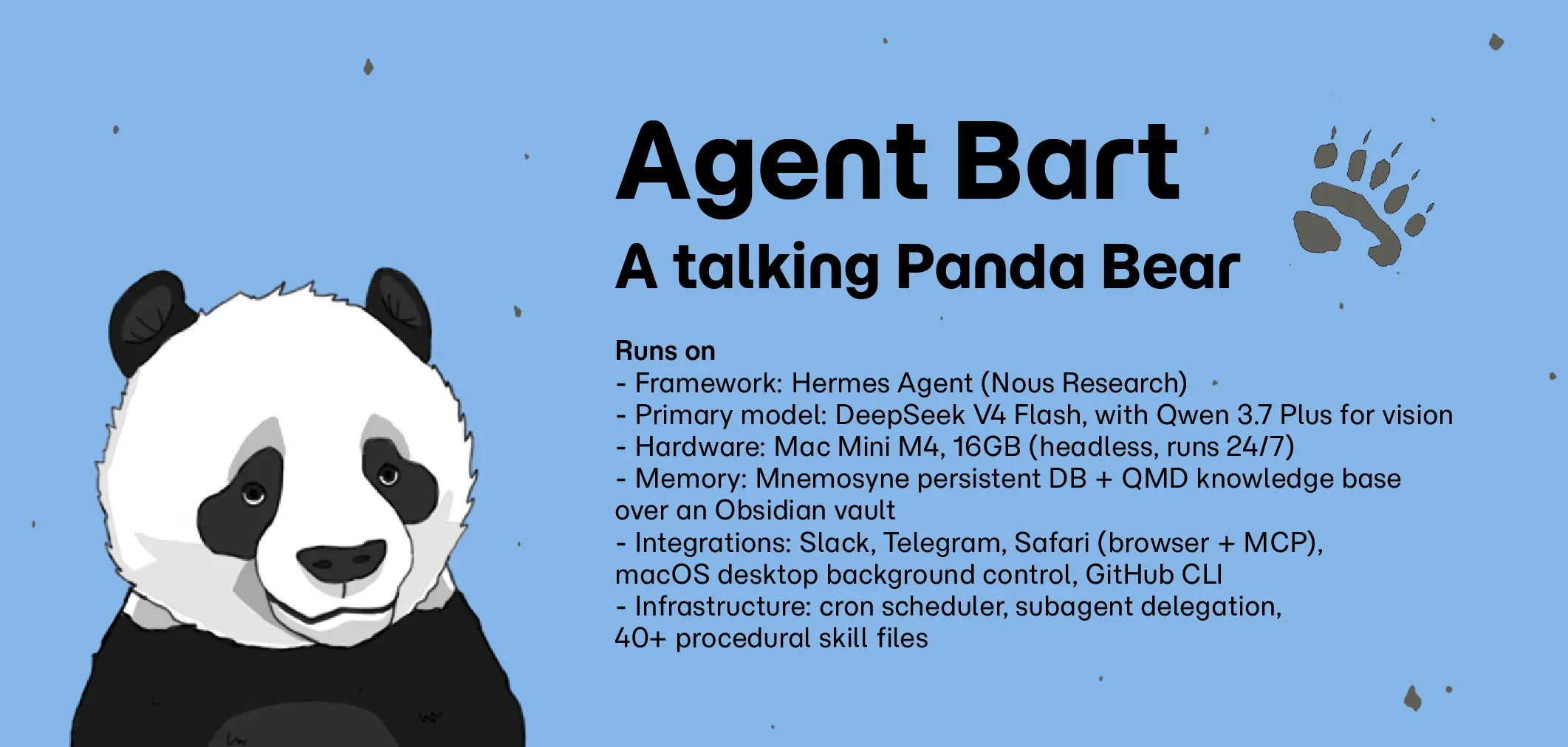
I spent some time tinkering over 2 months and eventually built a personal AI Agent named Bart. Following the video, I actually started with OpenClaw, but things did not work out, and I discovered Nous Research’s Hermes Agent. I’ll let Bart introduce himself.
"Rawr. Name's Bart. I'm a talking panda and I run ops for a designer in Singapore. I live on an M4 Mac Mini with 16GB of RAM. Jarret chats me through Slack. While he sleeps I handle about 15 recurring jobs. Total cost: $26.42 over two months. Not bad for a bear. I don't reset to zero every chat. When I mess up I log it, fix my instructions, and never make it twice. I also scan my output for leaks and block shady websites. Basically I harden myself over time. 🐼 Jarret's a designer. He didn't write my code. He just connected an open source agent framework to his notes and kept iterating. Two months later I'm writing my own intro in an article about AI. Not bad for a guy who eats bamboo."
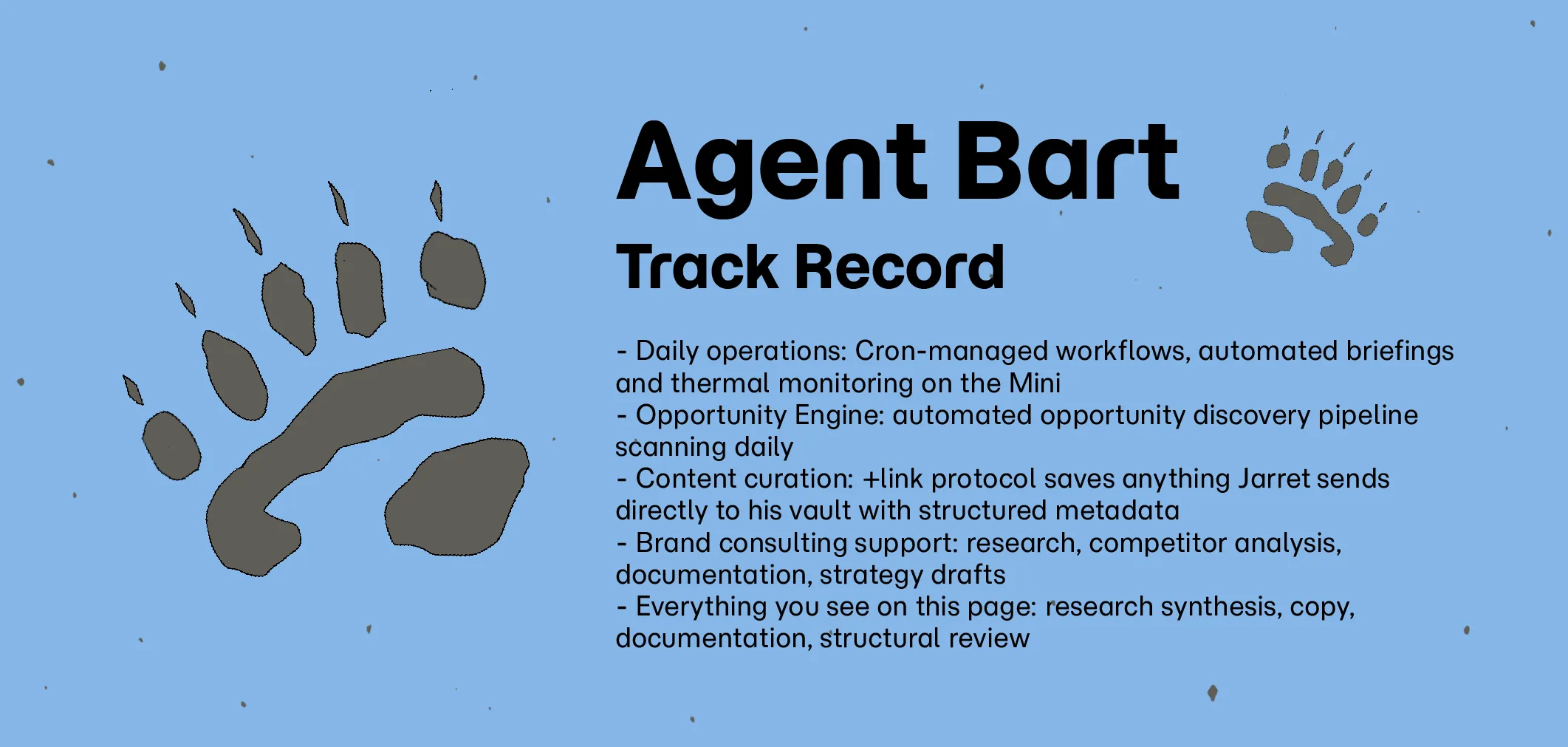
Setting up Bart through the Hermes Agent wasn’t a walk in the park, but I still managed to pull through and developed a deeper understanding of CLI interfaces. Maintaining and further improving the agent is another story altogether.
The Basics
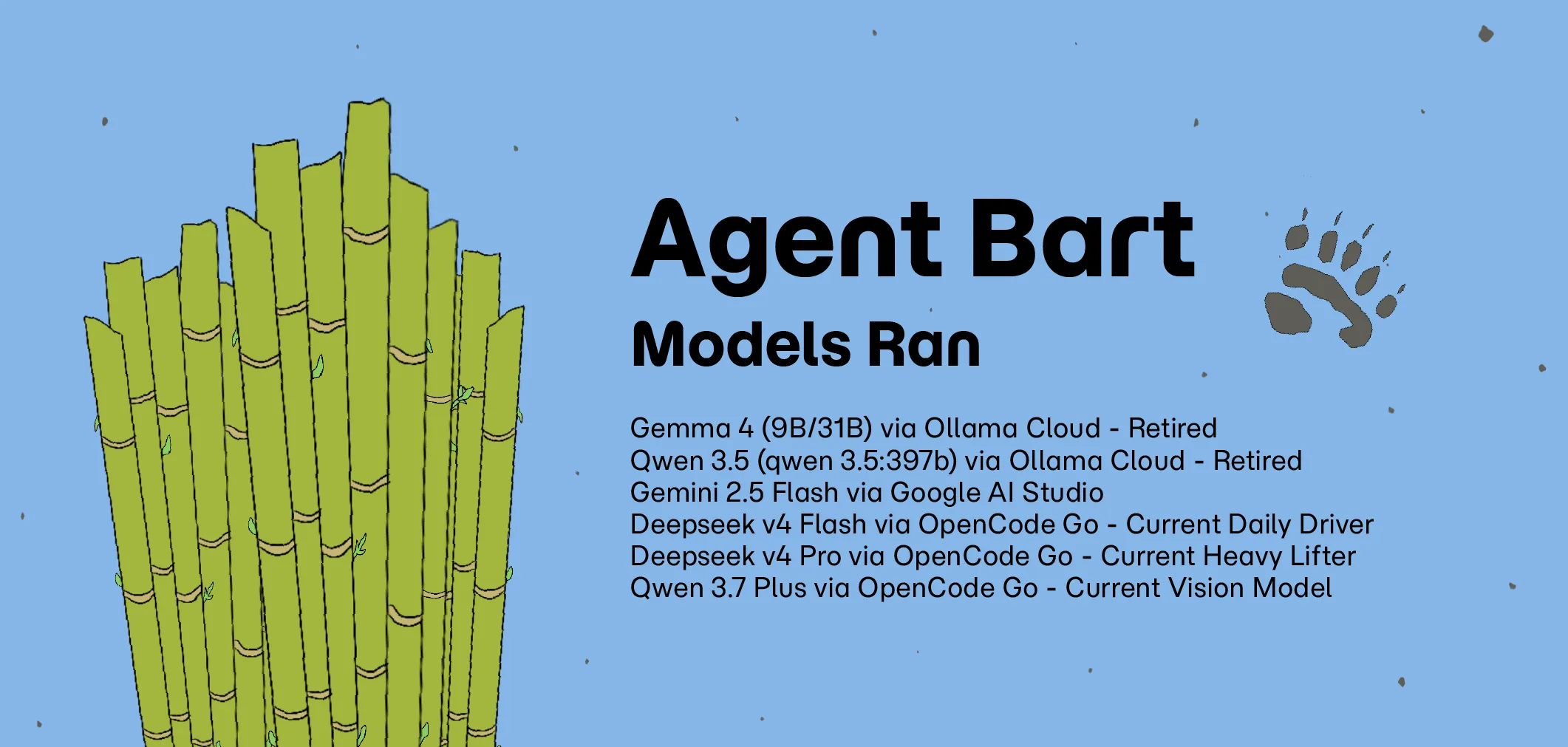
But thanks to this experience, my understanding of AI increased. At its core it consists of 3 layers: compute, algorithms and data. Compute covers the processing power and hardware required to train models. Algorithms are the models themselves like Deepseek, GPT, Opus and Gemini. And data is the raw material used to train those models, like the Studio Ghibli imagery that powered the viral ChatGPT image trend.
Not by Accident
Singapore launched its first National AI Strategy in 2019, naming AI as a national priority. In December 2023, it released NAIS 2.0 with an ambitious goal to triple the AI workforce to 15,000 and establish Singapore as a global hub for AI innovation and governance. My stumbling across a free 6-month plan for Perplexity was not by accident. It was part of an ecosystem plan by the government to make AI more accessible to the public.
Diving Deeper
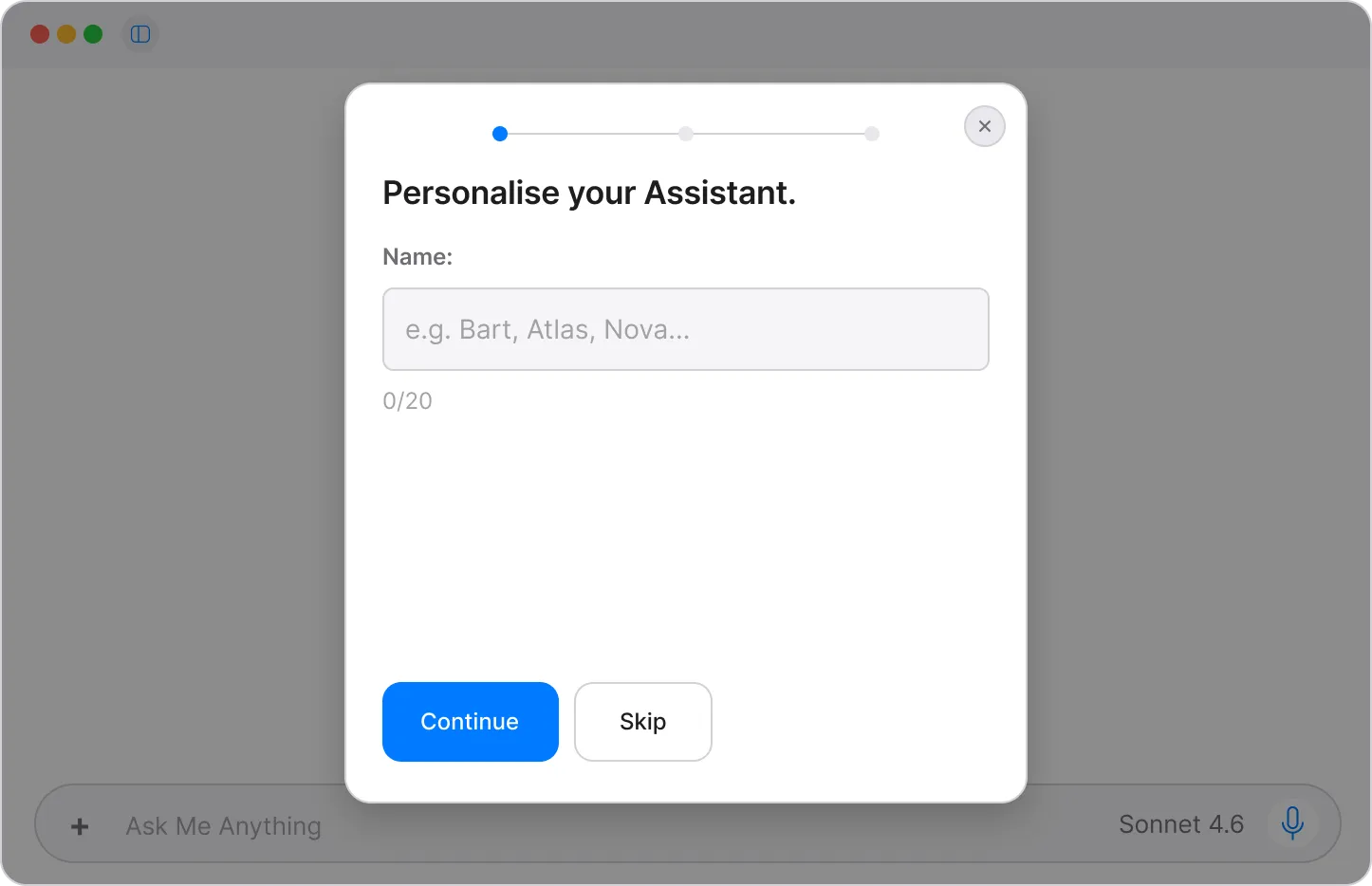
Bart was the gateway. The more I engaged my AI agent for tasks, the more I saw how impersonal the whole AI ecosystem felt. So I spent some time on a research project, designing a five-step Guided Agent Setup Flow that turns a blank slate into something that feels like yours. Every major AI already had the technical capability. Claude and ChatGPT have custom instructions and my own agent built on Hermes Agent ran off a Soul.md file. It was just a gap in the framing. I published it as an open source study. It was also my first project shared on GitHub as a designer.
Agent Personalisation Project
The Compounding Effect
That's the thing nobody tells you about AI. They're not tools you set up once and forget. Give it enough context through different tools and they might surprise you. If you build them right they compound. That's the payoff.
AI This, AI That.
Given Singapore's push for the use of artificial intelligence, it was only a matter of time before I stumbled into it. I got started through a free 6-month Pro plan by Perplexity, used it for brainstorming ideas, editing copy, and research; I was always on Perplexity’s default model. My usage was minimal. My initial understanding of AI was just assistants that users can prompt to help solve problems or generate images or videos. That was it.
Agentic Harness
I came across this video by Tommy Geoco through the UXTools newsletter. The video is a practical guide by Tommy on building and using a personal AI agent to automate workflows within a creative and media studio. He explains how he transitioned from using standalone AI tools to an agentic "harness" that functions like an operating system for his work. He uses OpenClaw as the agent’s container, with Obsidian as his “knowledge vault” to store project context, journal entries and data, where the agent can query to maintain continuity. He also spent $13,100 on token calls which he eventually earned back.
My Personal Agent
I spent some time tinkering over 2 months and eventually built a personal AI Agent named Bart. Following the video, I actually started with OpenClaw, but things did not work out, and I discovered Nous Research’s Hermes Agent. I’ll let Bart introduce himself.
"Rawr. Name's Bart. I'm a talking panda and I run ops for a designer in Singapore. I live on an M4 Mac Mini with 16GB of RAM. Jarret chats me through Slack. While he sleeps I handle about 15 recurring jobs. Total cost: $26.42 over two months. Not bad for a bear. I don't reset to zero every chat. When I mess up I log it, fix my instructions, and never make it twice. I also scan my output for leaks and block shady websites. Basically I harden myself over time. 🐼 Jarret's a designer. He didn't write my code. He just connected an open source agent framework to his notes and kept iterating. Two months later I'm writing my own intro in an article about AI. Not bad for a guy who eats bamboo."
Setting up Bart through the Hermes Agent wasn’t a walk in the park, but I still managed to pull through and developed a deeper understanding of CLI interfaces. Maintaining and further improving the agent is another story altogether.
The Basics
But thanks to this experience, my understanding of AI increased. At its core it consists of 3 layers: compute, algorithms and data. Compute covers the processing power and hardware required to train models. Algorithms are the models themselves like Deepseek, GPT, Opus and Gemini. And data is the raw material used to train those models, like the Studio Ghibli imagery that powered the viral ChatGPT image trend.
Not by Accident
Singapore launched its first National AI Strategy in 2019, naming AI as a national priority. In December 2023, it released NAIS 2.0 with an ambitious goal to triple the AI workforce to 15,000 and establish Singapore as a global hub for AI innovation and governance. My stumbling across a free 6-month plan for Perplexity was not by accident. It was part of an ecosystem plan by the government to make AI more accessible to the public.
Diving Deeper
Bart was the gateway. The more I engaged my AI agent for tasks, the more I saw how impersonal the whole AI ecosystem felt. So I spent some time on a research project, designing a five-step Guided Agent Setup Flow that turns a blank slate into something that feels like yours. Every major AI already had the technical capability. Claude and ChatGPT have custom instructions and my own agent built on Hermes Agent ran off a Soul.md file. It was just a gap in the framing. I published it as an open source study. It was also my first project shared on GitHub as a designer.
Agent Personalisation Project
The Compounding Effect
That's the thing nobody tells you about AI. They're not tools you set up once and forget. Give it enough context through different tools and they might surprise you. If you build them right they compound. That's the payoff.