Jarret, Ho Kai Siang
My Secret Weapon as a Designer: Writing
My Secret Weapon as a Designer: Writing
A Natural Progression
Writing started as a practical skill while working on projects and pitches as a designer. From conceptualising ideas to captions and presentation decks. With a strong foundation in designing graphics and visuals, it's no surprise writing came next. There was a period where I was just writing and publishing about things and work I liked. I wanted to continue that habit. Hence this article.
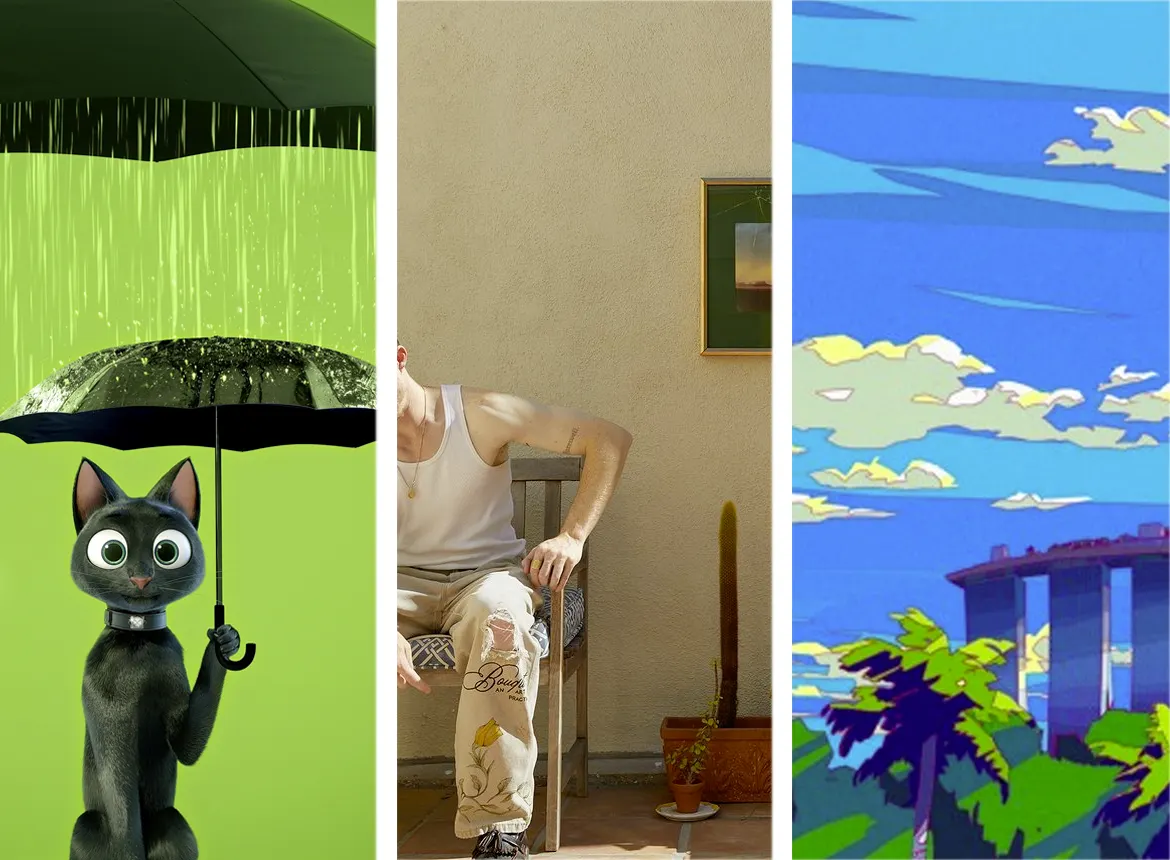
Writing about something, then getting to be part of it and seeing how things actually work in real-time, has got to be the best thing ever.
The Complexity of Writing
Over time, I've realized that writing as a skill is more complex than I thought. There are four different fields, each with different nuances and goals. Understanding these distinctions has been the biggest shift in my thinking. Copywriting, content writing, UX writing, and technical writing are the four different fields in writing.
A recent undertaking was working on the redesign and positioning for the offerings of my design practice. Having a clear understanding of what copywriting and UX writing was helped me greatly in deciding what elements to keep, cut and add. Also keeping in mind what direction to take for
future updates.
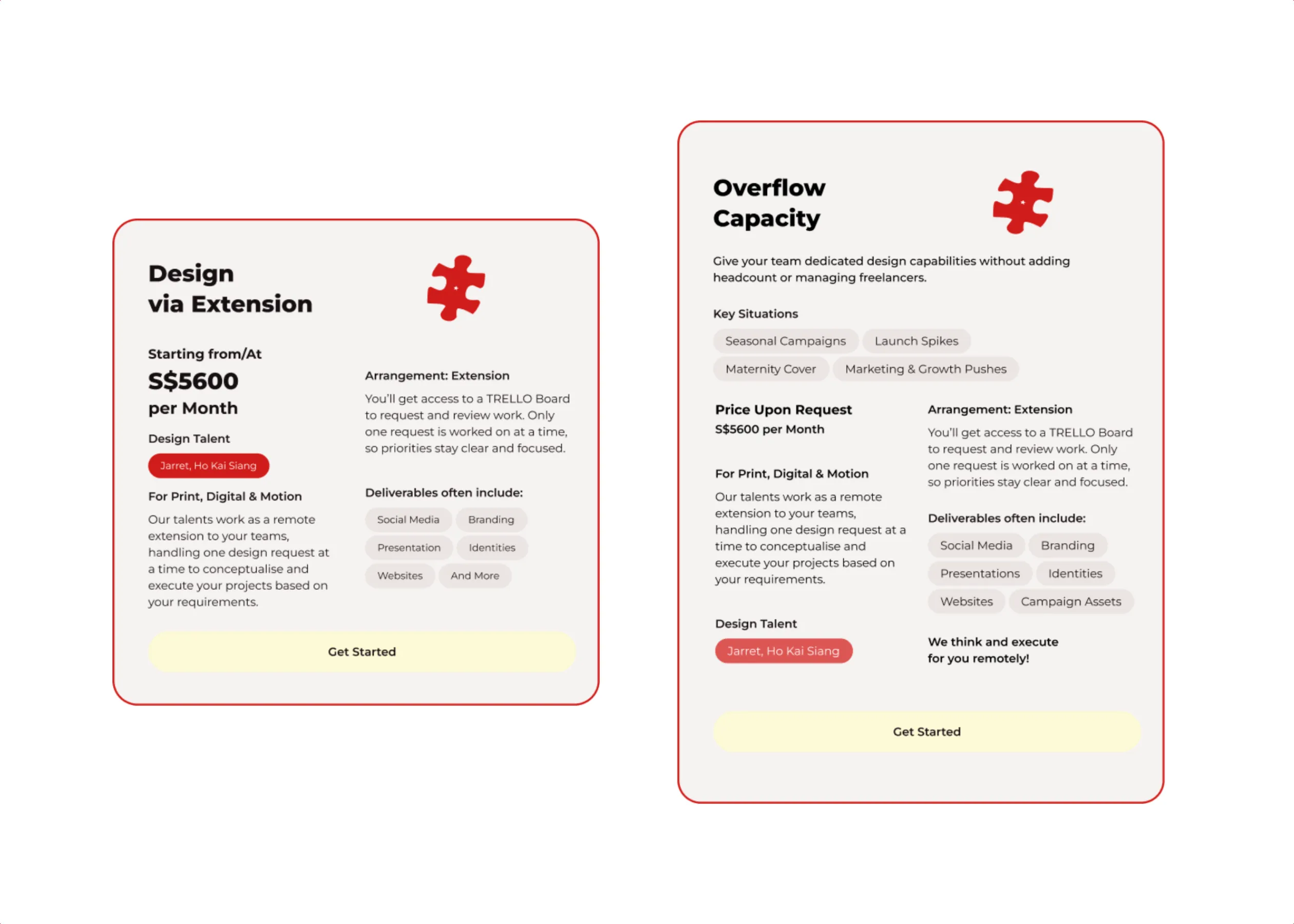
Component redesign and copy update for OHJARRET,CO
Copy for Sales
Copywriting is copy that persuades and drives immediate action, clicks, purchases, or sign-ups. You'll find it in marketing and advertising materials, from websites, landing page headlines, button text, sales emails, and print magazines. Apple does this best, with nearly no misses.
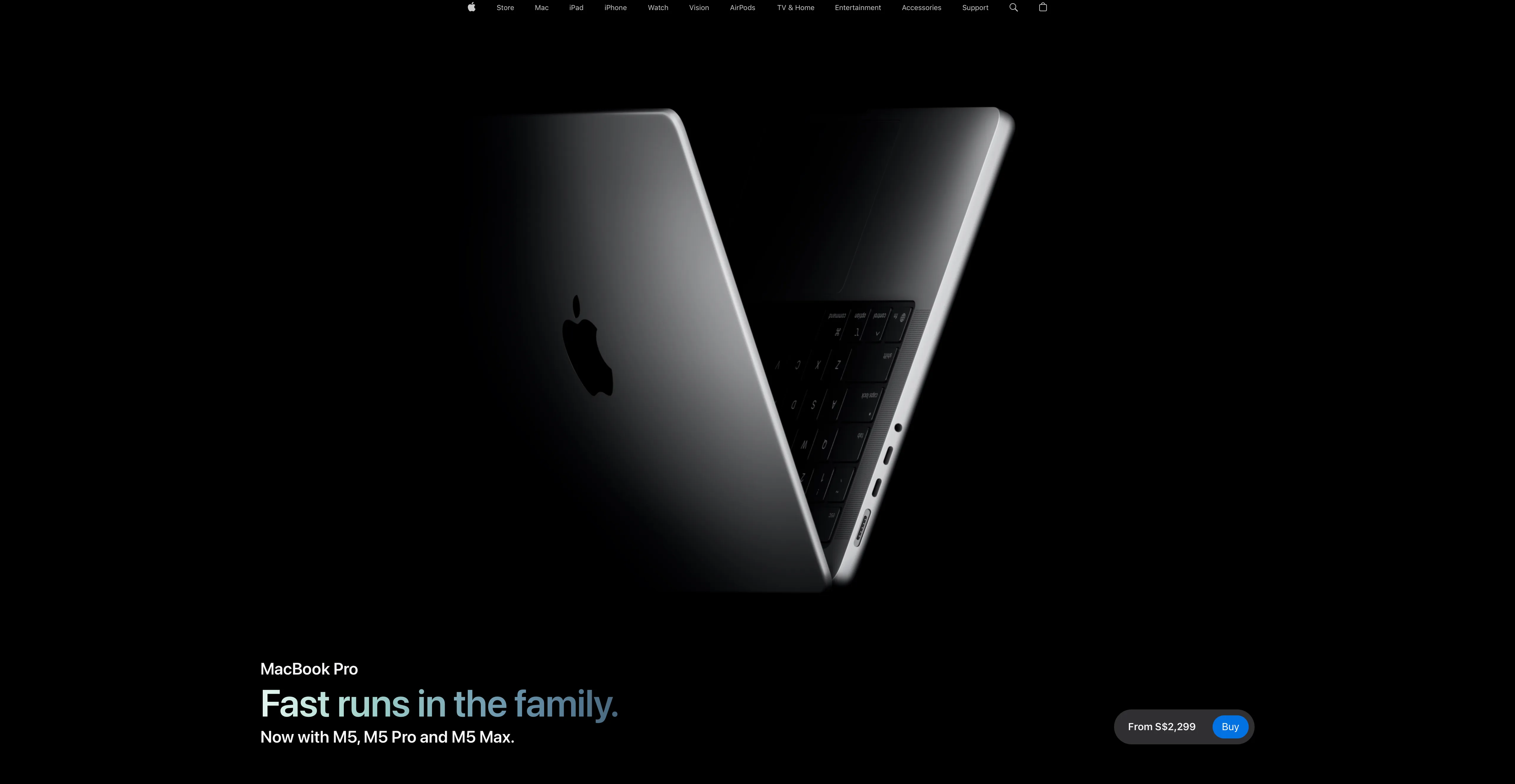
Take the headline for the Macbook Pro series. "Fast runs in the family". It positions the Macbook Pro as one of the fastest Macbook models in it's ecosystem, just using 5 words. Short and sweet.
Copy for Perspective
Content writing is what you're reading now. Its purpose is to inform, engage, and establish authority. Examples include blog posts, articles, guides, white papers, and newsletters. A good example is UXTOOLS by Tommy Gecco, a newsletter I follow that details design news, happenings and tools.

Copy for User Experience
When you're browsing the web or navigating an app and the experience feels seamless, that's often due to UX writing. It focuses on usability and the user's experience within a product flow. UX writing appears in error messages, button labels, and onboarding tooltips. It is concise and helpful, every piece of text serves a specific function.
Example: When you enter the wrong password and see "Incorrect password. Try again?" instead of "Error 401: Authentication failed". That's UX writing. It's human, clear, and tells you what to do next.
Copy for Technicalities
Ever stumbled on a project's docs page where information exists in never-ending troves? That's technical writing. It explains complex systems or processes accurately and thoroughly. It's precise, gets straight to the point and avoids flair or sales pitches. You'll find technical writing in documentation, user manuals, and setup guides.
A good example is the documentation for Hermes Agent. A self-improving AI agent built by Nous Research, the only agent with a built-in
learning loop.

The Human Voice
In the age of artificial intelligence, where copy can be generated, is writing still relevant as a skillset? My view is that the human voice and perspective will always matters, no matter how efficient and powerful technology gets. Writing as a skill has not replaced my work in design. If anything, it complements it. From faster turnarounds, to better understanding of the big picture in projects. These days, writing and design come naturally, always with practice of course.
A Natural Progression
Writing started as a practical skill while working on projects and pitches as a designer. From conceptualising ideas to captions and presentation decks. With a strong foundation in designing graphics and visuals, it's no surprise writing came next. There was a period where I was just writing and publishing about things and work I liked. I wanted to continue that habit. Hence this article.
Writing about something, then getting to be part of it and seeing how things actually work in real-time, has got to be the best thing ever.
The Complexity of Writing
Over time, I've realized that writing as a skill is more complex than I thought. There are four different fields, each with different nuances and goals. Understanding these distinctions has been the biggest shift in my thinking. Copywriting, content writing, UX writing, and technical writing are the four different fields in writing.
A recent undertaking was working on the redesign and positioning for the offerings of my design practice. Having a clear understanding of what copywriting and UX writing was helped me greatly in deciding what elements to keep, cut and add. Also keeping in mind what direction to take for
future updates.
Component redesign and copy update for OHJARRET,CO
Copy for Sales
Copywriting is copy that persuades and drives immediate action, clicks, purchases, or sign-ups. You'll find it in marketing and advertising materials, from websites, landing page headlines, button text, sales emails, and print magazines. Apple does this best, with nearly no misses.
Take the headline for the Macbook Pro series. "Fast runs in the family". It positions the Macbook Pro as one of the fastest Macbook models in it's ecosystem, just using 5 words. Short and sweet.
Copy for Perspective
Content writing is what you're reading now. Its purpose is to inform, engage, and establish authority. Examples include blog posts, articles, guides, white papers, and newsletters. A good example is UXTOOLS by Tommy Gecco, a newsletter I follow that details design news, happenings and tools.
Copy for User Experience
When you're browsing the web or navigating an app and the experience feels seamless, that's often due to UX writing. It focuses on usability and the user's experience within a product flow. UX writing appears in error messages, button labels, and onboarding tooltips. It is concise and helpful, every piece of text serves a specific function.
Example: When you enter the wrong password and see "Incorrect password. Try again?" instead of "Error 401: Authentication failed". That's UX writing. It's human, clear, and tells you what to do next.
Copy for Technicalities
Ever stumbled on a project's docs page where information exists in never-ending troves? That's technical writing. It explains complex systems or processes accurately and thoroughly. It's precise, gets straight to the point and avoids flair or sales pitches. You'll find technical writing in documentation, user manuals, and setup guides.
A good example is the documentation for Hermes Agent. A self-improving AI agent built by Nous Research, the only agent with a built-in
learning loop.
The Human Voice
In the age of artificial intelligence, where copy can be generated, is writing still relevant as a skillset? My view is that the human voice and perspective will always matters, no matter how efficient and powerful technology gets. Writing as a skill has not replaced my work in design. If anything, it complements it. From faster turnarounds, to better understanding of the big picture in projects. These days, writing and design come naturally, always with practice of course.