Personalising AI Agents
Rebuilding
One’s Dignity
Through Nature
Every AI assistant onboards the same way: sign in, then a blank 'How can I help you?' This study explores personalisation for AI assistants. Instead of that blank greeting, users name their agent, pick a face, and set a tone that fits how they communicate. The focus is on the personalisation layer, the screens and decisions that make an agent feel like yours.
Every AI assistant onboards the same way: sign in, then a blank 'How can I help you?' This study explores personalisation for AI assistants. Instead of that blank greeting, users name their agent, pick a face, and set a tone that fits how they communicate. The focus is on the personalisation layer, the screens and decisions that make an agent feel like yours.
Cage The Animal is the debut pop-R&B tune written and performed by
budding artiste Naomi Guha. The tune chronicles the cycle of abusive, toxic relationships, and how to get from it triumphantly in order to rebuild
one’s dignity.
Key Deliverables
Key Deliverables
UX Design, User flow mapping, lo-fi wireframes, visual design system, high-fidelity screens, interaction notes, research synthesis, interactive prototype.
UX Design, User flow mapping, lo-fi wireframes, visual design system, high-fidelity screens, interaction notes, research synthesis, interactive prototype.
UX Design, User flow mapping, lo-fi wireframes, visual design system, high-fidelity screens, interaction notes, research synthesis, interactive prototype.
My Role
My Role
I led the project from research through hi-fi designs and an interactive prototype. Synthesising findings on AI fatigue and memory personalisation into a lean onboarding flow, building a reusable design system, and prototyping interactions.
I led the project from research through hi-fi designs and an interactive prototype. Synthesising findings on AI fatigue and memory personalisation into a lean onboarding flow, building a reusable design system, and prototyping interactions.
I led the project from research through hi-fi designs and an interactive prototype. Synthesising findings on AI fatigue and memory personalisation into a lean onboarding flow, building a reusable design system, and prototyping interactions.
Research
Research
Three things were happening in 2026 that made this project relevant.
Three things were happening in 2026 that made this project relevant.
Three things were happening in 2026 that made this project relevant.
01.
AI fatigue was real.
Users were tired of generic AI features slapped onto every product. The NN/g State of UX 2026 report called it, when everything gets an AI sparkle, it becomes noise.
02.
The Memory Divide
Research from MIT NANDA showed that 90% of employees use consumer AI tools at work, but only 40% have company subscriptions. The number one reason? Lack of memory and personalisation. Tools that don't remember you get abandoned.
03.
The commoditisation
of User Interfaces
Design systems made interfaces cheap to produce. The differentiator was no longer layout, it was personality.
This project started as a brief research on personalisation in AI agents and evolved into a design sprint.
This project started as a brief research on personalisation in AI agents and evolved into a design sprint.
This project started as a brief research on personalisation in AI agents and evolved into a design sprint.
The Mechanism
The Mechanism
The core idea is simple: collect a user's choices into a structured markdown profile that gets injected into the LLM's system prompt on every turn. The agent doesn't just know your name. It has a persistent identity shaped by those choices.
The technical capability for agent personalisation already exists. Claude has project knowledge and custom instructions. ChatGPT has memory and custom instructions. In production agent systems, identity is stored in structured markdown files that define an agent's name, role, tone, boundaries, and tool scope. These files get loaded into the system prompt on every session. The pattern is proven.
The core idea is simple: collect a user's choices into a structured markdown profile that gets injected into the LLM's system prompt on every turn. The agent doesn't just know your name. It has a persistent identity shaped by those choices.
The technical capability for agent personalisation already exists. Claude has project knowledge and custom instructions. ChatGPT has memory and custom instructions. In production agent systems, identity is stored in structured markdown files that define an agent's name, role, tone, boundaries, and tool scope. These files get loaded into the system prompt on every session. The pattern is proven.
The core idea is simple: collect a user's choices into a structured markdown profile that gets injected into the LLM's system prompt on every turn. The agent doesn't just know your name. It has a persistent identity shaped by those choices.
The technical capability for agent personalisation already exists. Claude has project knowledge and custom instructions. ChatGPT has memory and custom instructions. In production agent systems, identity is stored in structured markdown files that define an agent's name, role, tone, boundaries, and tool scope. These files get loaded into the system prompt on every session. The pattern is proven.

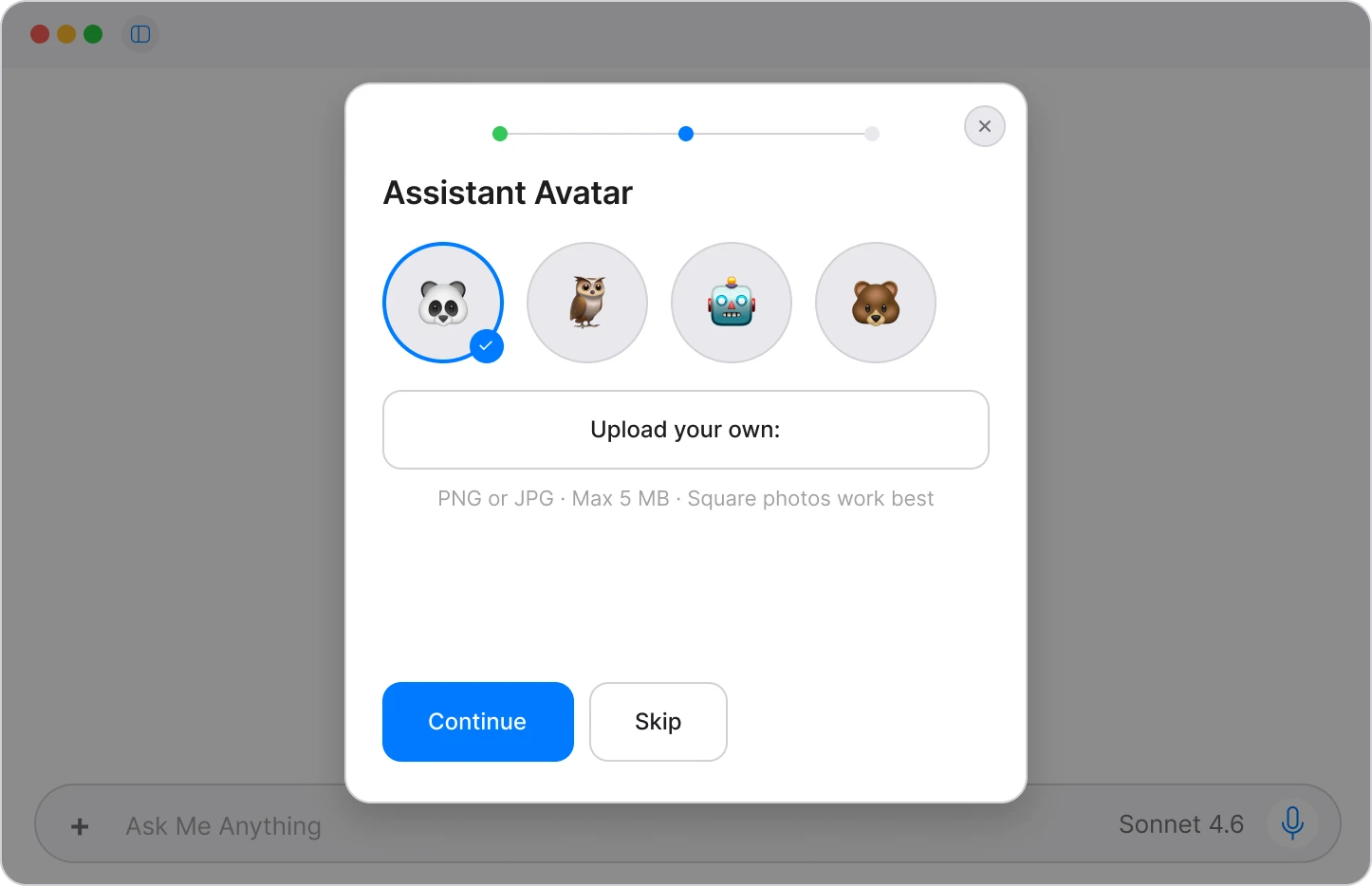

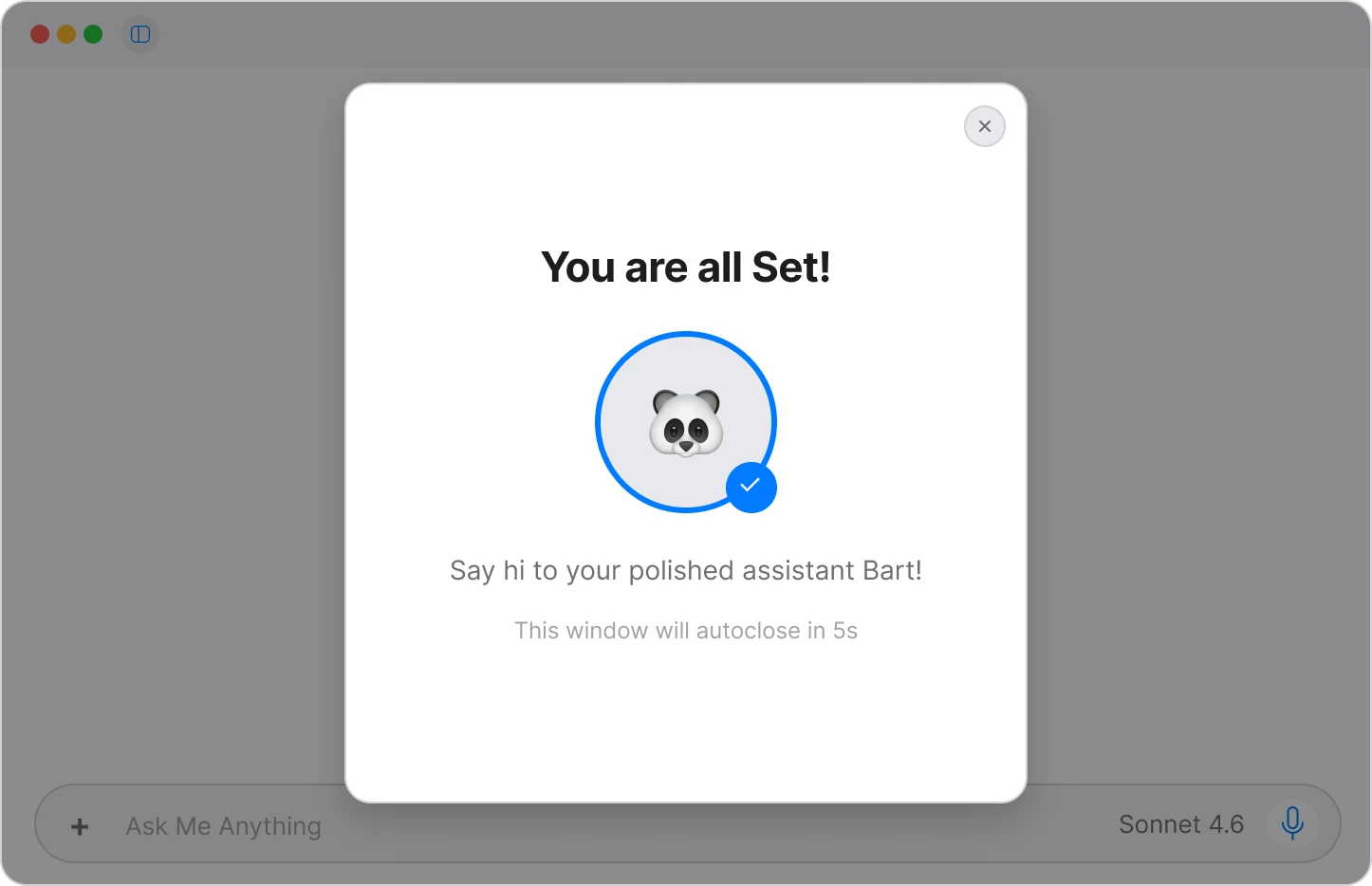

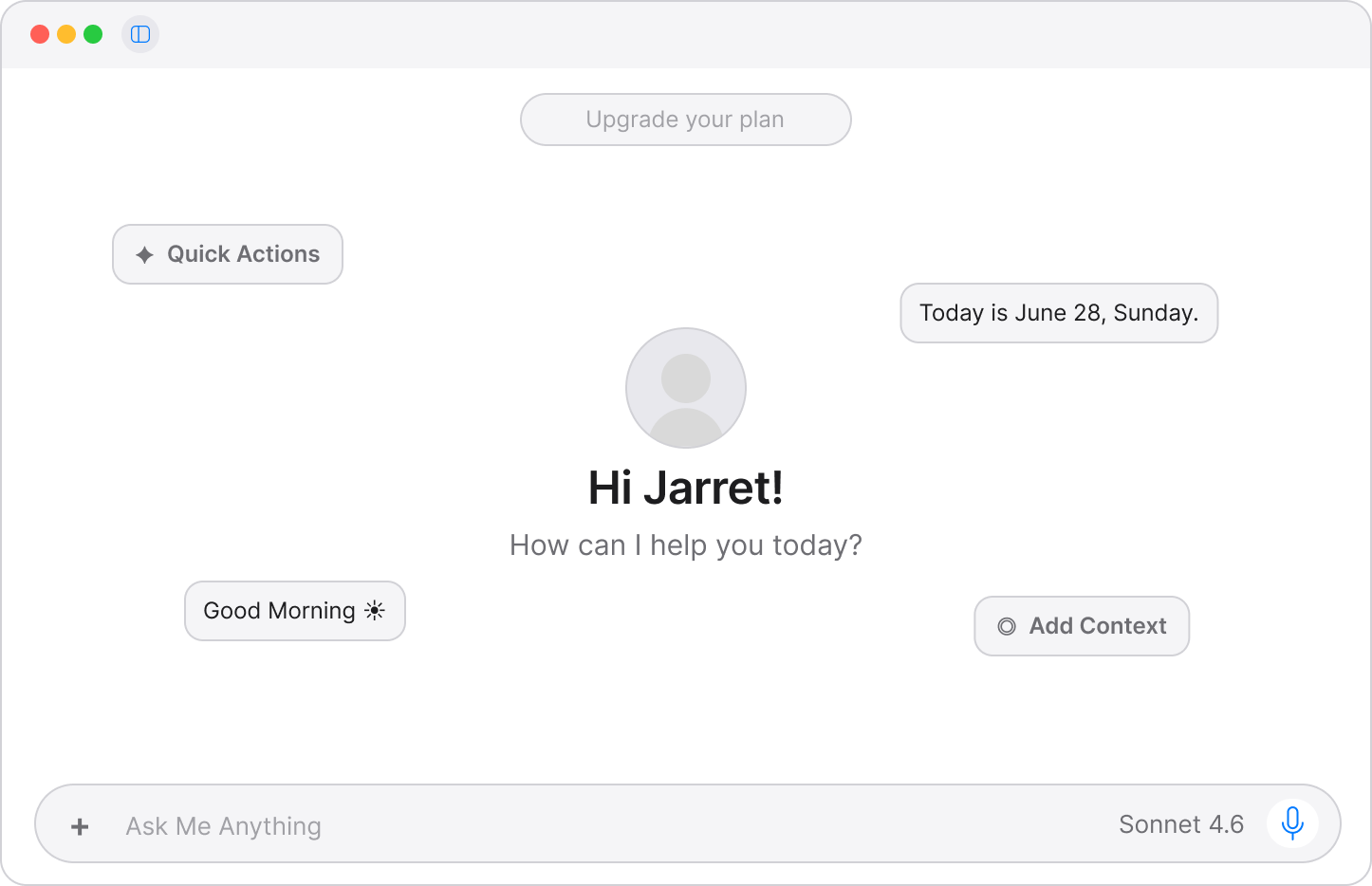
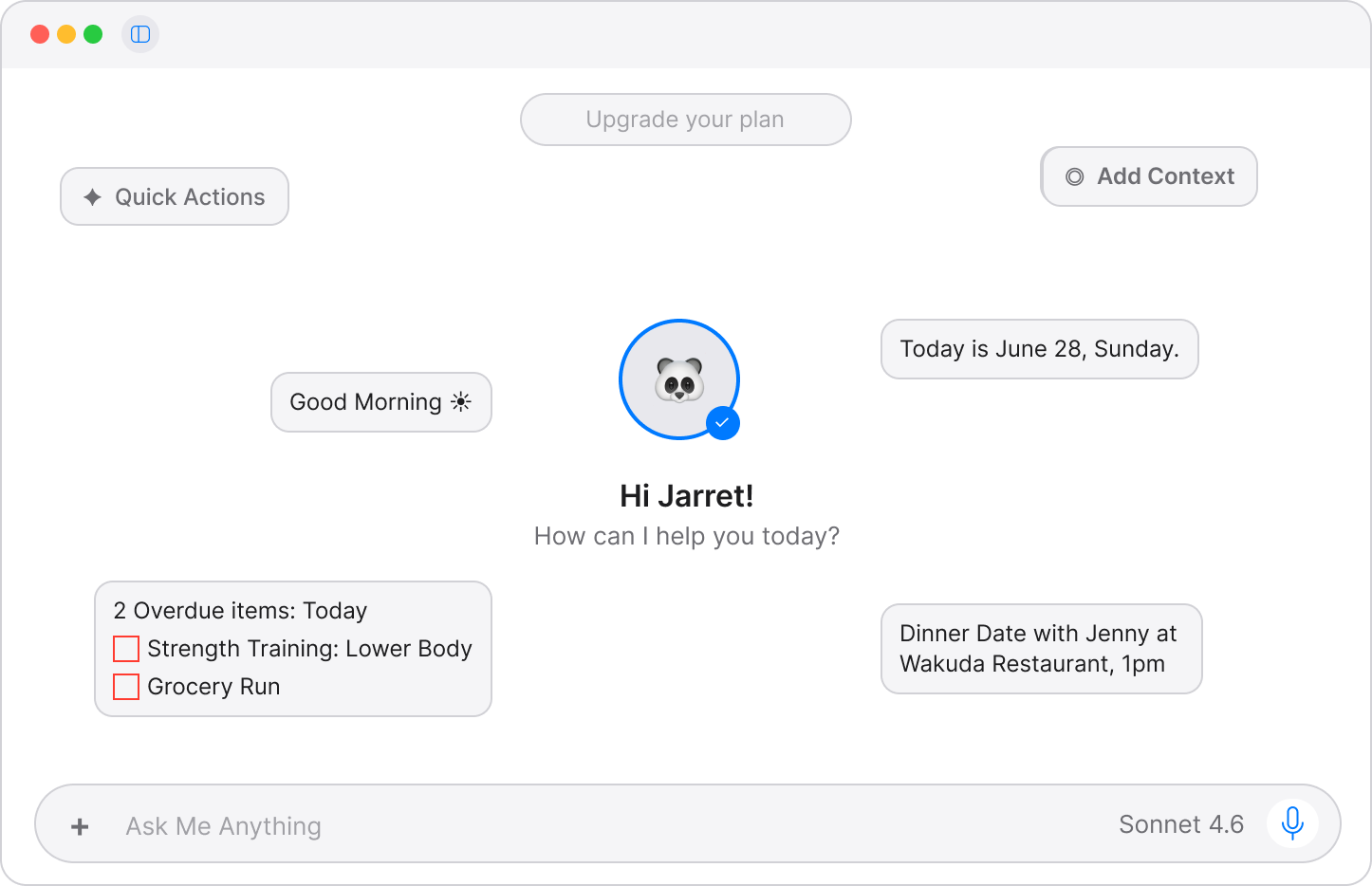
The three choices in this prototype map directly to those files:
Name sets the agent's identity
Avatar gives it a visual representation
Tone defines its communication style
What doesn't exist is a UI onboarding flow that writes to these files. Users currently edit them through documentation and raw markdown, not through the product itself. The personalisation layer is treated as an advanced feature when it should be the front door.
This project explores that missing layer. Not the technology, but the experience of setting up an agent for the first time.
The three choices in this prototype map directly to those files:
Name sets the agent's identity
Avatar gives it a visual representation
Tone defines its communication style
What doesn't exist is a UI onboarding flow that writes to these files. Users currently edit them through documentation and raw markdown, not through the product itself. The personalisation layer is treated as an advanced feature when it should be the front door.
This project explores that missing layer. Not the technology, but the experience of setting up an agent for the first time.
The three choices in this prototype map directly to those files:
Name sets the agent's identity
Avatar gives it a visual representation
Tone defines its communication style
What doesn't exist is a UI onboarding flow that writes to these files. Users currently edit them through documentation and raw markdown, not through the product itself. The personalisation layer is treated as an advanced feature when it should be the front door.
This project explores that missing layer. Not the technology, but the experience of setting up an agent for the first time.
Learning & Takeaways
Learning & Takeaways
This project started from my own curiosity and from using AI assistants day to day. It began with a single user flow, built alongside my agent, Bart. My role was scoping, designing, and reviewing outputs and iterations, sometimes with AI in the loop, sometimes without.
This project started from my own curiosity and from using AI assistants day to day. It began with a single user flow, built alongside my agent, Bart. My role was scoping, designing, and reviewing outputs and iterations, sometimes with AI in the loop, sometimes without.
This project started from my own curiosity and from using AI assistants day to day. It began with a single user flow, built alongside my agent, Bart. My role was scoping, designing, and reviewing outputs and iterations, sometimes with AI in the loop, sometimes without.
It is genuinely a new way of working. But I would not want to become so dependent on AI that I could not work without it. An agent also means managing the workflow and reviewing what it produces. Design with AI, though, genuinely efficient, is not plug-and-play yet. For this project I used Figma and Cursor, a combination that made my workflow faster and smoother. If I could wire Bart, my external Hermes agent, directly into the specific software I use, work as we know it would become a breeze. The real craft is in organising and managing those workflows.
It is genuinely a new way of working. But I would not want to become so dependent on AI that I could not work without it. An agent also means managing the workflow and reviewing what it produces. Design with AI, though, genuinely efficient, is not plug-and-play yet. For this project I used Figma and Cursor, a combination that made my workflow faster and smoother. If I could wire Bart, my external Hermes agent, directly into the specific software I use, work as we know it would become a breeze. The real craft is in organising and managing those workflows.
It is genuinely a new way of working. But I would not want to become so dependent on AI that I could not work without it. An agent also means managing the workflow and reviewing what it produces. Design with AI, though, genuinely efficient, is not plug-and-play yet. For this project I used Figma and Cursor, a combination that made my workflow faster and smoother. If I could wire Bart, my external Hermes agent, directly into the specific software I use, work as we know it would become a breeze. The real craft is in organising and managing those workflows.
I also learned when to stop designing. The original 8-screen scope felt complete on paper, but the role definition and memory screens had not fully matured. With too little user payoff, they were currently not worth adding to onboarding user flow. I avoided over-building options, keeping each flow to a single action, click, or button press. Also rather than treating users who skip as an edge case, the unpersonalised state clarifies the value of personalisation by contrast, and it works for everyone, whether they personalise or not.
I also learned when to stop designing. The original 8-screen scope felt complete on paper, but the role definition and memory screens had not fully matured. With too little user payoff, they were currently not worth adding to onboarding user flow. I avoided over-building options, keeping each flow to a single action, click, or button press. Also rather than treating users who skip as an edge case, the unpersonalised state clarifies the value of personalisation by contrast, and it works for everyone, whether they personalise or not.
I also learned when to stop designing. The original 8-screen scope felt complete on paper, but the role definition and memory screens had not fully matured. With too little user payoff, they were currently not worth adding to onboarding user flow. I avoided over-building options, keeping each flow to a single action, click, or button press. Also rather than treating users who skip as an edge case, the unpersonalised state clarifies the value of personalisation by contrast, and it works for everyone, whether they personalise or not.
Credits
Credits
Designer: Jarret, Ho Kai Siang
Tools: Figma, Obsidian, Cursor,
Hermes Agent
Special thanks to Bart, my agent who kept the sprint on track.
Designer: Jarret, Ho Kai Siang
Tools: Figma, Obsidian, Cursor,
Hermes Agent
Special thanks to Bart, my agent who kept the sprint on track.
All Rights to OHJARRET.CO
Design Talent: Jarret, Ho Kai Siang
Project Produced by
Jarret, Ho Kai Siang
Music Production: Homeground Studios
Music Publishing: Umami Records(Now Defunct) Special Thanks: Reynard Adrianto, Ng Yin Shian,
Jake Low, Zam Husref, Naomi Guha
All Rights to OHJARRET.CO
Design Talent: Jarret, Ho Kai Siang Project Produced by
Jarret, Ho Kai Siang
Music Production:
Homeground Studios
Music Publishing: Umami Records
(Now Defunct)
Special Thanks: Reynard Adrianto, Ng Yin Shian, Jake Low, Zam Husref, Naomi Guha
References
References
Mem0. State of AI Agent Memory 2026: Benchmarks, Architectures & Production Gaps. April 1, 2026. https://mem0.ai/blog/state-of-ai-agent-memory-2026
Arnold, Chris. From Models to Memory: The Next Big Leap in AI Agents in Customer Experience. ASAPP, October 1, 2025. https://www.asapp.com/blog/from-models-to-memory-the-next-big-leap-in-ai-agents-in-customer-experience
Moran, Kate, et al. State of UX 2026: Design Deeper to Differentiate. Nielsen Norman Group, January 16, 2026. https://www.nngroup.com/articles/state-of-ux-2026/
MIT NANDA. The GenAI Divide: State of AI in Business 2025. 2025.
https://mlq.ai/media/quarterly_decks/v0.1_State_of_AI_in_Business_2025_Report.pdf
Grand View Research. AI Agents Market Size, Share and Trends Report, 2026-2033. 2026. https://www.grandviewresearch.com/industry-analysis/ai-agents-market-report
Mem0. State of AI Agent Memory 2026: Benchmarks, Architectures & Production Gaps. April 1, 2026. https://mem0.ai/blog/state-of-ai-agent-memory-2026
Arnold, Chris. From Models to Memory: The Next Big Leap in AI Agents in Customer Experience. ASAPP, October 1, 2025. https://www.asapp.com/blog/from-models-to-memory-the-next-big-leap-in-ai-agents-in-customer-experience
Moran, Kate, et al. State of UX 2026: Design Deeper to Differentiate. Nielsen Norman Group, January 16, 2026. https://www.nngroup.com/articles/state-of-ux-2026/
MIT NANDA. The GenAI Divide: State of AI in Business 2025. 2025.
https://mlq.ai/media/quarterly_decks/v0.1_State_of_AI_in_Business_2025_Report.pdf
Grand View Research. AI Agents Market Size, Share and Trends Report, 2026-2033. 2026. https://www.grandviewresearch.com/industry-analysis/ai-agents-market-report
All Rights to OHJARRET.CO
Design Talent: Jarret, Ho Kai Siang
Project Produced by
Jarret, Ho Kai Siang
Music Production: Homeground Studios
Music Publishing: Umami Records(Now Defunct) Special Thanks: Reynard Adrianto, Ng Yin Shian,
Jake Low, Zam Husref, Naomi Guha
All Rights to OHJARRET.CO
Design Talent: Jarret, Ho Kai Siang Project Produced by
Jarret, Ho Kai Siang
Music Production:
Homeground Studios
Music Publishing: Umami Records
(Now Defunct)
Special Thanks: Reynard Adrianto, Ng Yin Shian, Jake Low, Zam Husref, Naomi Guha
Last Updated: 1 Mar 2026
Last Updated: 1 Mar 2026
Last Updated: 1 Mar 2026
Jarret, Ho Kai Siang